

The “Big Bang” of May 2026: Why Your Current Tenancy Agreement is Now a £40,000 Liability
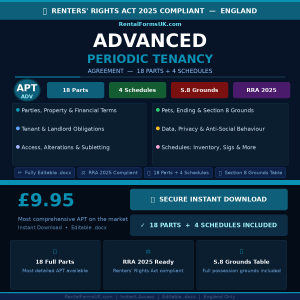

Securing a compliant Renters Rights Act 2026 Tenancy Agreement is now the top priority for English landlords as the 1 May 2026 “Big Bang” implementation date approaches. On this single day, the Assured Shorthold Tenancy (AST) effectively dies, and every existing agreement will automatically convert into a new, open-ended Assured Periodic Tenancy (APT).
For the unprepared landlord, this isn’t just a change in terminology—it is a legal minefield. If you are still using “standard” templates or hoping to rely on old contractual clauses, you are likely sitting on a massive financial liability. Here is the expert-level reality of the Renters Rights Act 2026 Tenancy Agreement and why your paperwork needs an immediate upgrade to avoid ruinous civil penalties.
1. The 16-Month “Lock-Out”: The Moratorium You Didn’t See Coming

The headline news is that Section 21 “no-fault” evictions are gone. The “hidden” news is the 12-month protected period.
- The Restriction: You cannot use Ground 1 (moving in) or Ground 1A (selling) during the first 12 months of a new tenancy.
- The Reality: Because these grounds require a 4-month notice period, you effectively cannot regain possession of your property for at least 16 months from the start of the tenancy.
If you are considering your exit strategy or need to know what your property is worth in this new regulatory landscape, you should(https://thelondontenant.com/valuation/) to see how these timelines affect your asset’s liquidity.
2. The “Purported Let” Trap: A £7,000 Administrative Mistake

Many landlords believe they can still “agree” on a 12-month fixed term if the tenant is willing. This is a dangerous misconception. The Act explicitly bans fixed-term tenancies.
If you—or your agent—even suggest or “purport to let” a property for a fixed period after 1 May 2026, you are in breach of the law. Local authorities can impose a civil penalty of up to £7,000 for this single administrative error. Your agreement must be built as a rolling “periodic” contract from day one to remain legal.
3. The “28-Day Pet Clock”: Procedural Success or Failure?
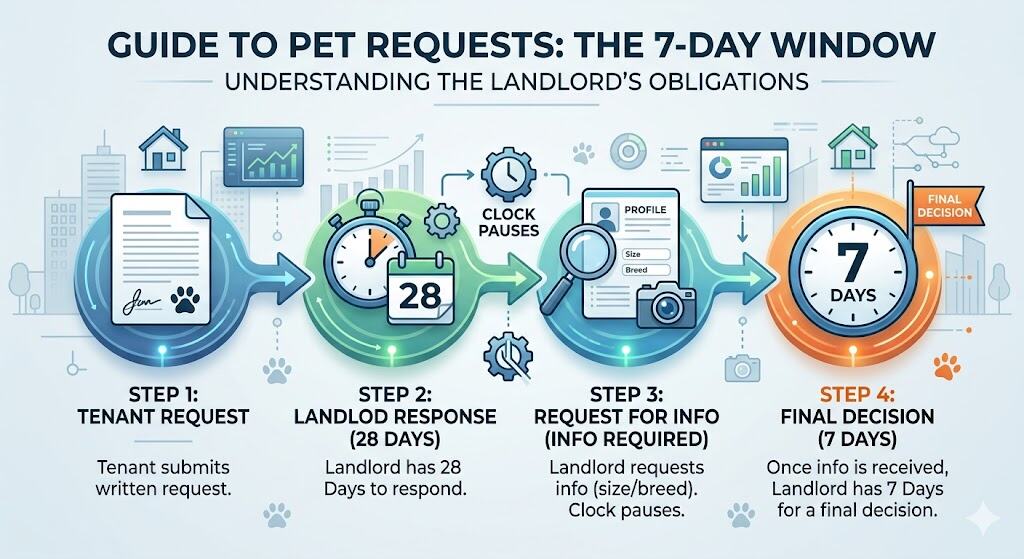
The right to request a pet is now a statutory “implied term” in every agreement. You can no longer use blanket “No Pets” clauses; doing so is a breach that invites council scrutiny.
- The Deadline: You have exactly 28 days to respond to a written request.
- The Strategy: If you need more info (breed, age), you must ask within those 28 days. Once provided, you have only 7 days to make a final decision.
- The Solution: While early drafts changed, the final Act focuses on “reasonable consideration.” Landlords should protect themselves using their own specialist insurance policies and clear, up-to-date agreements that set out pet-related responsibilities.
4. Rent Increases: The Death of the “Automatic Uplift”
Does your current agreement have a “rent review clause” tied to inflation or a set percentage? As of 1 May 2026, those clauses are null and void.
- Section 13 Only: The only legal way to increase rent is via the statutory Form 4A process.
- Two-Month Notice: You must now provide two months’ notice (increased from one month) for any increase.
- The Tribunal Risk: Tenants can challenge any increase at the First-tier Tribunal, which will determine the open-market value.
Why Your Renters Rights Act 2026 Tenancy Agreement Must Be “Advanced”
Property management is no longer a “side hustle”—it is a high-stakes professional operation. As you grow your portfolio, you need systems that can handle these complex new notice periods and safety logs. You can(https://mayaops.co.uk/) to ensure your business moves from 40 to 600 units while staying fully compliant.
The cost of a “slip up” has never been higher:
- £40,000 Fines: For serious or repeated breaches, including the “reckless” use of possession grounds.
- 24-Month Rent Repayment Orders (RROs): Tenants can now claim back up to two years of rent for licensing or safety breaches—doubled from the previous limit.

Our (https://rentalformsuk.com/product/advanced-assured-periodic-tenancy-agreement-england-renters-rights-act-2026/) is engineered specifically for the 2026 regime. It provides a compliance audit trail including all 37 possession grounds and mandatory Awaab’s Law summaries.
The May 2026 Compliance Deadline

- Stop serving Section 21 notices after 30 April 2026.
- Serve the Official Information Sheet to all existing tenants by 31 May 2026. This must be a PDF attachment, not a link, or you face a £7,000 fine.
- Audit Your Paperwork: If you have verbal agreements, you must provide a written summary of terms by 31 May.
Don’t risk your investment with an outdated template. To make sure you haven’t missed any critical steps, download our(https://rentalformsuk.com/product/landlord-compliance-checklist-2026-free-download-england/) to audit your business today.
Protect your investment with a contract designed for the “Renters’ Rights Revolution.”
Advanced Assured Periodic Tenancy Agreement (England) – Renters Rights Act 2026


